Councilman Allan Van Ness faces challenge from Mooney, Smith | Vote 2013
Published 11:56 am Wednesday, July 17, 2013
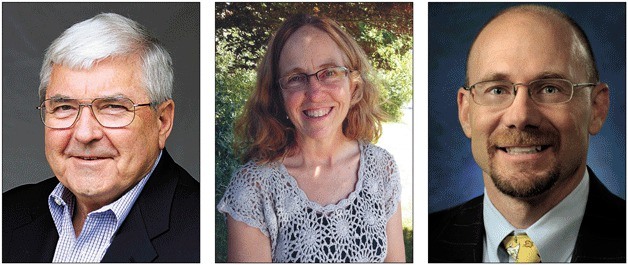
The Reporter submitted four questions to each council candidate. Here is how they answered. For the entire Q&A search “Vote 2013.”
Kenmore City Councilman Allan Van Ness was elected to Position 6 in 2005 and won re-election in 2009. This year he will face environmental activist Elizabeth Mooney and former certified public accountant Ken Smith during the Aug. 6 primary.
While Mooney and Smith may agree on many things, the primary focus in their campaigns gives voters a distinct choice. Both have chosen to focus on their strengths during the campaign.
Smith said the top three issues facing the city are its financial position, strategy and economic development. He said that no one really knows the financial position of the city as it uses “checkbook” accounting.
“It does not give us the complete picture of all our assets and all our liabilities,” Smith said. “It does not tell us where we really are … The city council needs to promptly figure out its real financial position, not just the balance in the checkbook in order to fulfill its duties to the residents of Kenmore.”
He said this issue plagues many businesses, non-profits and municipalities. Once the city can show a precise financial position, other issues can be approached and a strategy for economic growth can be devised, said Smith.
The three biggest issues facing the city for Mooney are health, public policy towards
the environment and promoting a healthier city. She believes the city can promote economic growth through better environmental stewardship.
“Rewarding private businesses with incentives … [will] bring economic healthwealth to the community and turn ourselves into a tourist destination,” Mooney said.
Van Ness agrees that business and economic growth, along with environmental issues, are two of the top three issues facing the city. But Van Ness also includes transportation issues, from sidewalks to State Route 522 completion.
The recent sale of Kenmore Village continues to be a huge piece of the city’s economic development strategy. But Van Ness, who was not on the council when the land was purchased, said that he is still opposed to the city getting involved in the real estate and landlord part of the process. But ultimately he is comfortable with the results.
“… Rather than trying to find [a buyer] who would build precisely what we wanted, we looked for a buyer who had a similar vision to ours, a builder we could work with,” Van Ness said. “Ultimately, what is constructed will be determined by the marketplace, not a prescription from the city. I’m pleased with the selection process.”
Van Ness said a higher sale price would have been nice but the city received what the market would bear.
“Not many properties are worth more than they were in 2007,” said Van Ness. “The more conditions we place on the developer, the lower the sales price. The city did not invest in the Kenmore Village property to turn a profit, at least a profit in dollars.”
Van Ness points to the expected economic value the city will get out of the re-development of the land.
“I see this transaction as a catalyst for other redevelopment in Kenmore’s downtown core,” said Van Ness.
Mooney agrees that the city will see great value in the future.
“I believe that what we might have lost in revenue, we will gain back in great businesses being the springboard for good economic growth in Kenmore,” said Mooney.
She is a big supporter of having Kenmore Camera as the anchor tenant for Kenmore Village and believes in supporting local businesses.
“It may sound silly to some, but I believe sometimes good business decisions are based not just on the money’s bottom line, but also on a gut feeling that people will take great care of a community. [That they will] put care into a property and build something special that money can’t, on its own, make happen,” said Mooney. “I have confidence in the decision the city made in selling to Kenmore Camera and I have confidence in the city’s decision to sell to Benaroya. They are good people and care about a healthy Kenmore.”
But along with the redevelopment of Kenmore Village, Mooney also advocates for the replacement of the industrial park on Kenmore’s shoreline.
“We can’t have asphalt fumes spewing out toward our bikers, walkers and runners on the Burke Gilman Trail,” said Mooney. “Without health, there will be no wealth in our community.”
Smith admits he does not know much about the Kenmore Village process prior to 2012.
“What I understand is the city bought properties 10-plus years ago to ‘develop’ them and they sit today ‘undeveloped,’” said Smith. “On a pure results basis, this seems like a failure to achieve the goal in a timely fashion.
“I have heard from several residents who believe many costly mistakes were made since the city purchased the properties. Of particular concern seems to be the interactions with developers from 2007 until recently.”
He said there should be an independent review of the process prior to 2012 but he is supportive of the recent steps in selecting the new developers.
One thing that Smith dislikes about the contract is there is no timetable for development. He would like to have seen more detail in the contract overall.
“The city and the developers seem inclined to move at a prudent pace, but the absence of exact terms in the contract leaves the city at risk of having the property sit in its current state without being developed,” said Smith.
Van Ness said economic growth also comes from listening to what businesses want.
“I want Kenmore to have the reputation as a business-friendly city,” said Van Ness. “I want new businesses and existing businesses alike to be met in City Hall with a ‘How can we help you be successful?’ enthusiasm.”
Van Ness wants the continuation of ideas like the Kenmore business incubator and expedited permitting processes.
But Smith takes issue with the business incubator.
“The city council authorized $238,000 for a ‘pilot’ incubator,” said Smith. “The original estimate was $50,000 … I do not think that almost a quarter of a million dollars qualifies as a pilot. To me it is a major investment that deserves scrutiny and adequate resources as well as routine monitoring/oversight.”
And while Van Ness supports the business registration ordinance that the council recently passed, because of the extra cost he would have liked to see the registration collected locally and not through the state.
“We need to show the businesses of Kenmore that our business registration really is an information source, not a revenue source, and that they will receive benefits of significantly greater value than their registration fee,” said Van Ness.
He believes that attracting new businesses and promoting economic growth is the council’s No. 1 goal, while maintaining the city’s livability.
“We need to make Kenmore a destination city, not a pass through city,” said Van Ness.
Mooney believes that growth starts with good environmental and health policy.
“Don’t elect me unless you want me to vote for environmental health,” said Mooney. “I have chosen to stay in Kenmore and make it healthier, but we need to vote for new public policy for that to happen. The businesses will benefit if they are given the direction to be healthy and the freedom to do what they need to do without unnecessary governmental taxation … Our businesses are affected by asphalt fumes and industrialized shoreline, so my feeling is that the policy has to change first so our staff is directed to work with environmental health as its No. 1 priority. If health is not the priority in Kenmore now, then its wealth of opportunity will diminish as it has been doing, in my opinion, for the past 18 years I’ve lived here.”
She also wants the governing process to be more transparent, including televising council meetings.
Smith views growth in an entirely different way.
“I’m skeptical that most Kenmore residents want a lot of growth or that they want us to grow faster,” said Smith. “There are advantages and disadvantages of growth and I’m not sure we all understand those trade-offs … Some of the ideas I’d like to see us talk about would not necessarily show up in the economist’s definition of the gross domestic product, but I think they would make our community an even more attractive place to live, play and work.”
Smith wants more e-tailing or internet-based retail in Kenmore with low or no-growth impact.
“E-tailing would boost gross domestic product and sales tax but require fewer parking lots and less carbon emissions from driving to other regional shopping areas,” said Smith.
Smith said he likes new ideas but the implementation of those ideas is difficult.